
Vigtige pointer
- November includes several key dates that could move global markets, including the US midterms and the Bank of England’s interest rate decision.
- Inflation, employment, and other economic data will also be released globally.
- We’ve identified several UK, US, and EU dates for your November FX calendar.
Why an FX Calendar Matters for Business Payments
It’s important to keep a forex calendar because doing so can help you monitor exchange rate changes and plan your foreign currency conversion.
Whether you’re paying overseas suppliers and contractors or receiving payments, an FX calendar can help you build payment strategies, such as scheduling conversions when rates are favourable or structuring your trades to qualify for tiered FX discounts.
You can also pair your economic calendar with expert rate predictions — but ultimately, your goal should be to plan for market movements, not predict exact rates.
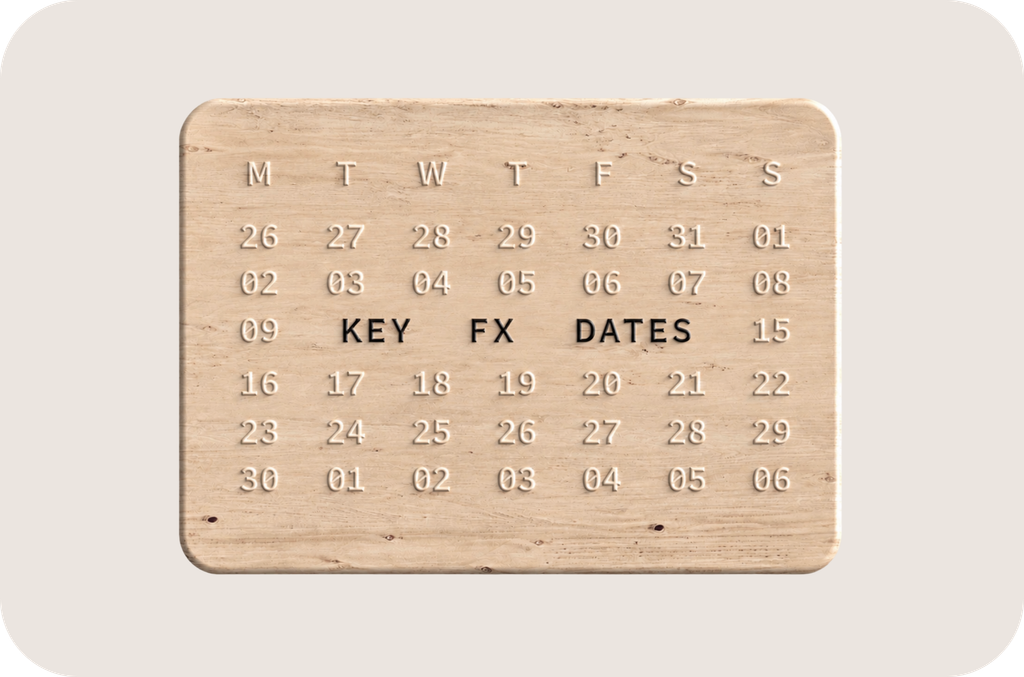
Here are several key dates to add to your FX calendar this month.
| Date | Region | Event |
| 3 November | US | US Midterm Elections |
| 4 November | Eurozone | Harmonised Indices of Consumer Prices (HICP) / Inflation Data |
| 5 November | STORBRITANNIEN | Bank of England Interest Rate Decision |
| 6 November | US | Non-Farm Payrolls and Unemployment Rate |
| 9 November | US | US Congress Reconvenes |
| 10 November | US | Consumer Price Index (CPI) / Inflation Data |
| 12 November | STORBRITANNIEN | GDP Growth Estimates |
| 13 November | Eurozone | Preliminary Q3 GDP and Employment Figures |
| 17 November | STORBRITANNIEN | Labour Market Report |
| 18 November | STORBRITANNIEN | Consumer Price Index (CPI) / Inflation Data |
| 20 November | STORBRITANNIEN | Retail Sales Data |
| 20 November | STORBRITANNIEN | Public Sector Finances |
Bank of England Interest Rate Decision – 5 November
The next Bank of England (BoE) interest rate decision is on 5 November. There is a 96% probability of a hike from the current 3.75% rate, per RateProbability.com.
The BoE interest rate is important because it indirectly but significantly affects currency prices. Rate hikes generally strengthen the pound (GBP), though forecasts from ExchangeRatesUK show a bearish outlook for GBP due to various other factors.
Additionally, the European Central Bank and US Federal Reserve are set to announce interest rates in December rather than November.
Inflation and Jobs Data – Throughout November
Several regions are set to release inflation data throughout November. This includes Eurozone HICP inflation data from the Eurozone (4 November) and Consumer Price Index data in the US (10 November) and UK (18 November).
The same regions will also release jobs data, including the US Non-Farm Payrolls and Unemployment Rate (6 November), the UK Labour Market Report (17 November), and the Eurozone’s preliminary quarterly GDP and employment figures (13 November).
Inflation and jobs data are related in that they reflect economic performance and impact policy. This can in turn affect FX rates, as higher-than-expected inflation and employment figures generally tend to strengthen currency exchange rates.
US Midterms and Congress Session – 3 November
The US midterm elections were held on 3 November, with the Democratic Party winning control of both the House and Senate.
This outcome has implications for the US dollar. Before the midterms, ING analysts projected that USD would weaken in response to a Democratic victory.
The previous Congress will also reconvene on 9 November in a “lame-duck session.” Significant legislation is unlikely until the newly elected Congress convenes in January 2027, but early negotiations could further affect USD prices.
UK Post-Budget Data – Throughout November
28 October marked the release of the UK Budget. Although the Budget is one of the UK’s most important economic announcements this year, the country also has several other key post-Budget data releases scheduled for November.
Upcoming data includes GDP estimates indicating the UK’s rate of economic growth (12 November), retail sales data showing recent consumer spending (20 November), and public sector finances and government borrowing data (20 November).
These dates are in addition to the UK Labour Market Report (17 November) and CPI inflation report (18 November) described in the previous sections.
Plan Payments Around Volatile Dates With Payset
Scheduling your payments around dates that could experience volatile FX rates doesn’t need to be difficult — but you need the right tools to plan ahead.
At Payset, we can help by providing these features:
- Multi-currency accounts: Easily send, receive, and exchange up to 35 currencies in 180+ countries, including EUR, GBP, and USD.
- Monitor rates: Our free FX calculators can help you decide when to make a trade. Try our GBP-EUR og EUR-USD converters — no sign-up is needed.
- Great FX pricing: Enjoy affordable FX trading from your Payset account.
- Tiered discounts: Offset your trading costs further with our tiered FX pricing model. You’ll get better pricing the more you trade.
- Business payment tools: Planning ahead? Use our bulk and scheduled payment tools to execute your payments when the time is right.
OFTE STILLEDE SPØRGSMÅL
Why should I keep an FX date calendar?
An FX calendar can help your business plan its transactions and trades around important dates that may coincide with volatility in currency rates.
What dates and events should I add to my economic calendar?
You should watch for interest rate decisions, inflation, employment, and economic data, and global events related to politics and government.
Does an FX calendar help me predict FX rates?
A forex calendar doesn’t predict FX rates on its own, but it can remind you to check expert FX price projections and reports. Having FX rate information on hand can help you spend your foreign currency balances when rates are most favourable.