


Even if classic British food may be stereotypically held in low regard by some other countries, a YouGov survey has found that 91% of Britons love their national cuisine. According to the same survey, more than 80% of Brits have listed these eight classic British dishes as their favourites:
- Yorkshire Pudding
- Sunday Roast
- Fish and Chips
- Crumpets
- Full English Breakfast
- Bacon Sandwich
- Scones
- Victoria Sponge
We checked the prices that these eight popular British dishes cost in different eateries in the last half of a century and as we journey back through time, it becomes evident that the flavours on our plates are not the only things that have transformed.
1. Yorkshire Pudding
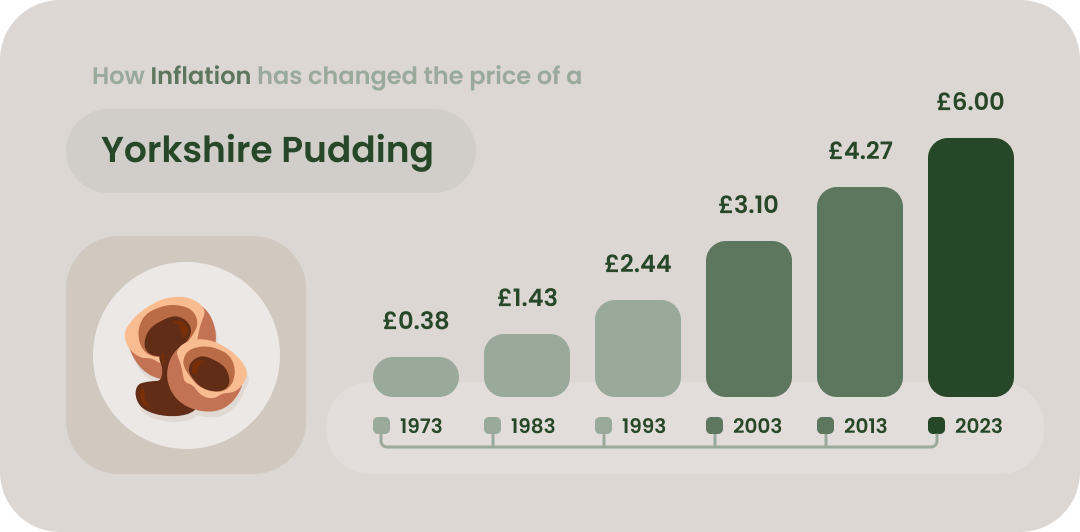
To enjoy a yummy Yorkshire Pudding in 1973, it would have cost us just £0.38. Today, it costs £6 to eat this tasty dish from Dakota Grill, a popular place with the UK’s first menu dedicated entirely to Yorkshire puddings. This means that the price of a Yorkshire Pudding has increased by 1478.95% in the last 50 years, which is 7.86% more than the inflation between those periods. A big increase in prices could be spotted in the last ten years, with the pudding at £4.27 in 2013 – a 40.5% increase compared to 2023.
2. Sunday Roast
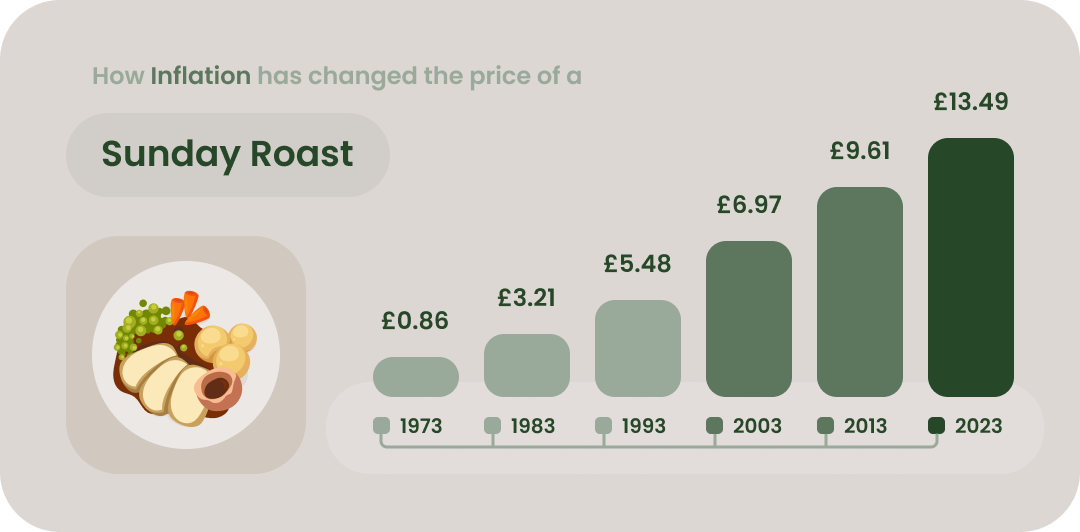
To enjoy a traditional Sunday Roast in one of Britain’s most famous carvery spots, Toby Carvery, you’d need around £13.49 today. The price has increased by 40.37% since 2013, when a Sunday Roast at the same establishment could be enjoyed for just £9.61. However, the price increase remains below the inflation between 2013 and 2023, which is 40.41%. A half-decade ago, you could buy a Sunday Roast for 1468.6% less at just £0.86 – 2.49% below the inflation rate between 1973 and 2023.
3. Fish and Chips
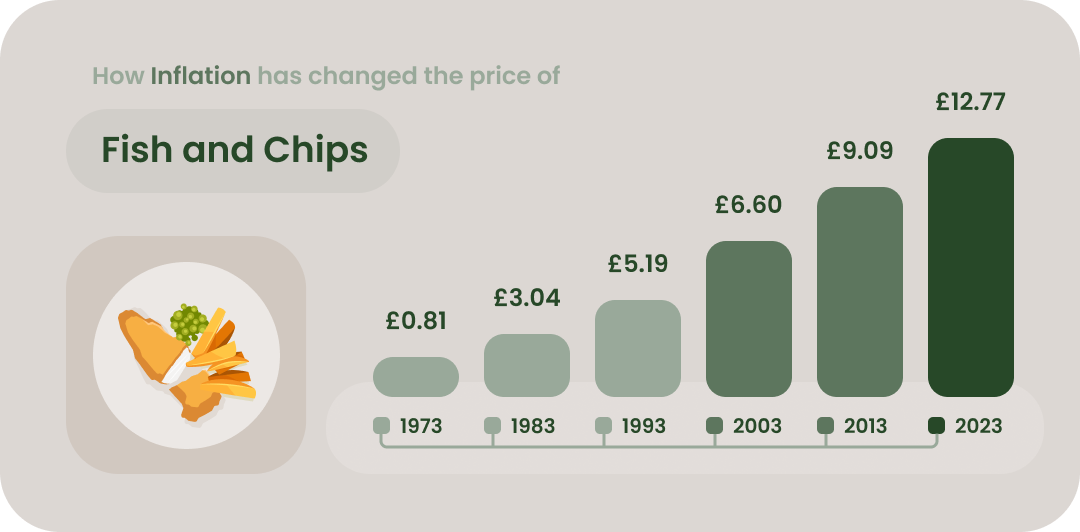
Fish and Chips are the bread and butter of British cuisine. It costs around £12.77 for this dish to be enjoyed at Whiteheads Fish & Chips, a chippy that won the title ‘Fish & Chip Takeaway of the Year’ in 2023. This price is 40.48% higher than in 2013 and 1476.54% higher than 50 years ago. For this specific dish, the price increase over the years seems to be higher than the actual inflation rate.
4. Crumpets
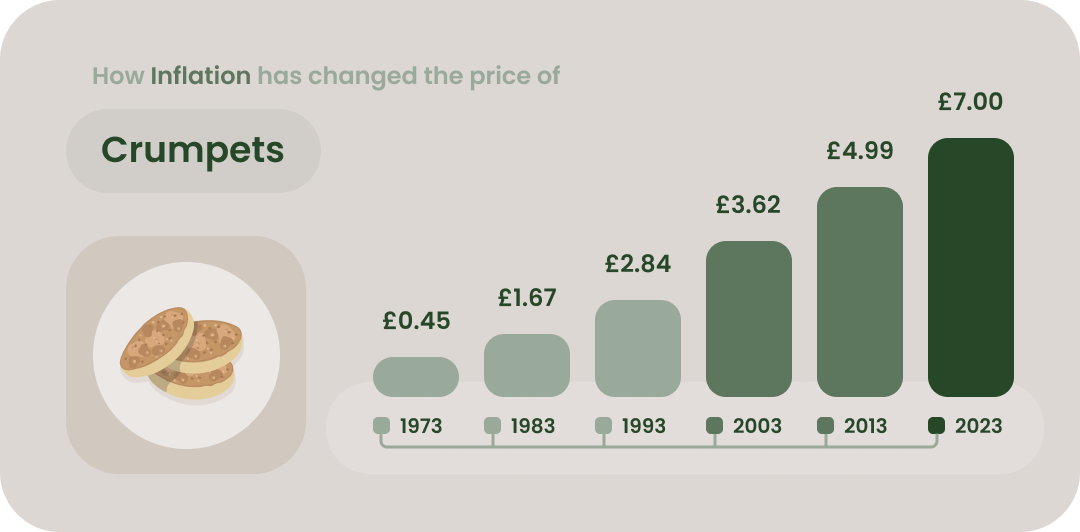
Crumpets are the flavoursome food that most Britons turn to every day, traditionally for breakfast. To enjoy this classic in Crumpets Cafe, an appreciated coffee place in London, will cost you around £7.00 currently – this is a 40.28% increase in price compared to 2013 when crumpets could have been enjoyed for just £4.99. Fifty years ago, the same dish cost £0.45, approximately 15 times less than in 2023 and way above the inflation rate.
5. Full English Breakfast
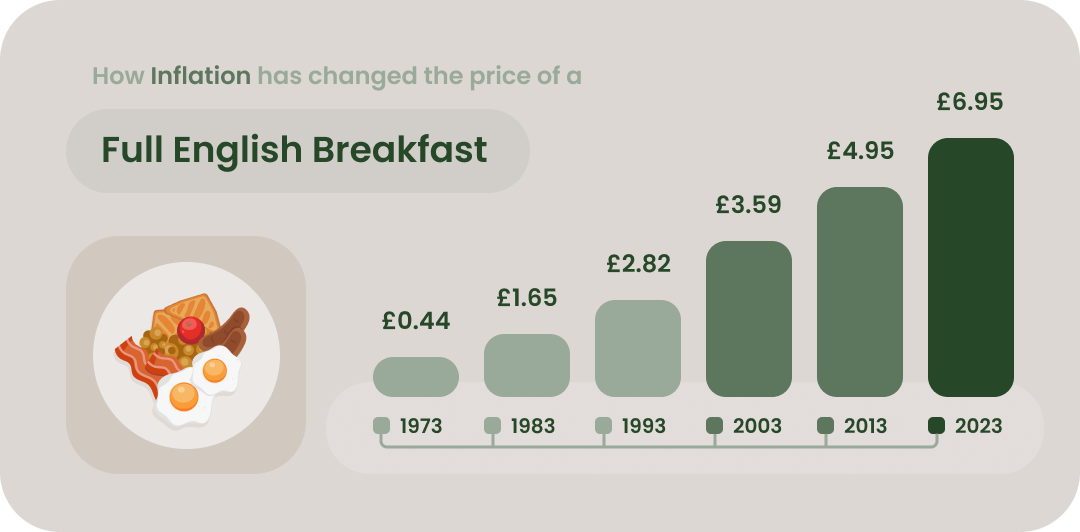
When you talk about British cuisine, one of the main foods that comes to mind is definitely the Full English Breakfast. Commonly consisting of bacon, eggs, British sausage, baked beans, fried tomato, fried mushrooms, and black pudding, with fried and toasted bread on the side. This traditional meal costs £6.95 on average in 2023, if you want to enjoy it in Regency Cafe, a popular place voted as the fifth best eating place in London recently, the price is just £2 more than ten years ago. It is almost hard to believe that a half-decade ago, the popular dish could be enjoyed for just £0.44, a price that might seem small, but it is 15.53% above the inflation rate.

6. Bacon Sandwich
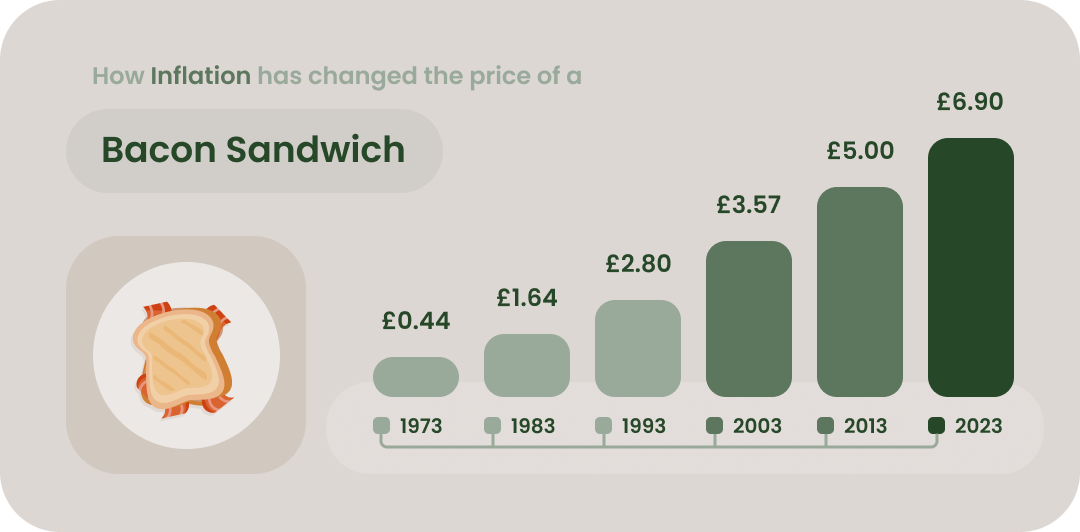
It might sound like a simple food for some, but Brits take their Bacon Sandwiches very seriously, and it’s often part of their daily routine. Bidding on Brits’ love for their sandwich, there are plenty of places across the UK that made this one of their main dishes on the menu, such as St John Bread and Wine, a restaurant in London that is famous for this particular sandwich. The price of a bacon sandwich in this restaurant is currently around £6.90, a 38% increase from ten years ago when it cost around £5. The same tasty sandwich could be bought for £0.44 fifty years ago, which is almost 16 times cheaper.
7. Scones
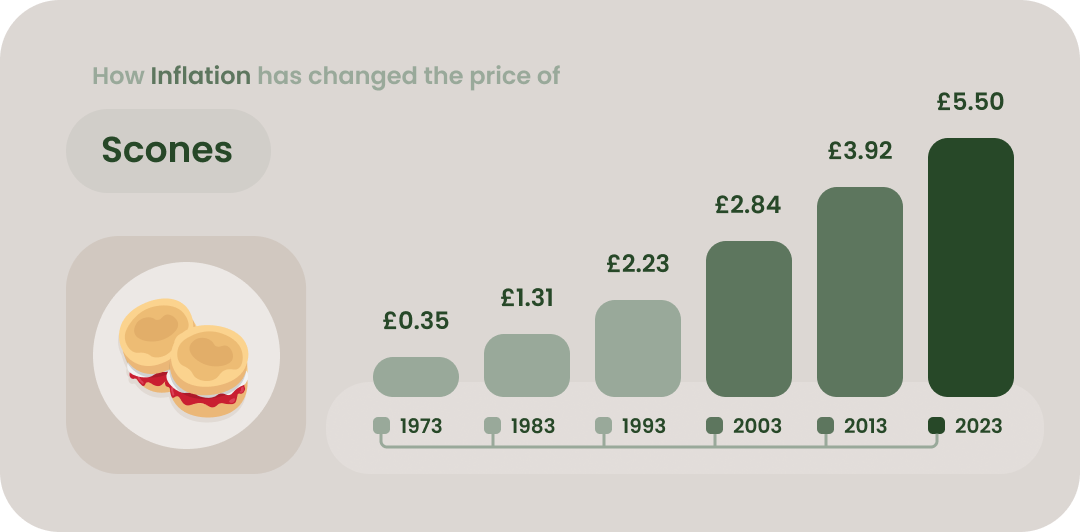
Around 85% of Brits think that scones are the best sweet British food, according to the same YouGov survey. Not quite a cake and not a pastry either, scones have a unique taste that stole British people’s hearts in the 1500s. To enjoy some delicious scones in Cheeky Scone, a place in London dedicated to this popular dessert, will set you back around £5.50 today, 40.30% more expensive than ten years ago when scones cost £3.92. In 1973, this unique dessert could be bought for just £0.35, making it one of the cheapest foods on our list.
8. Victoria Sponge
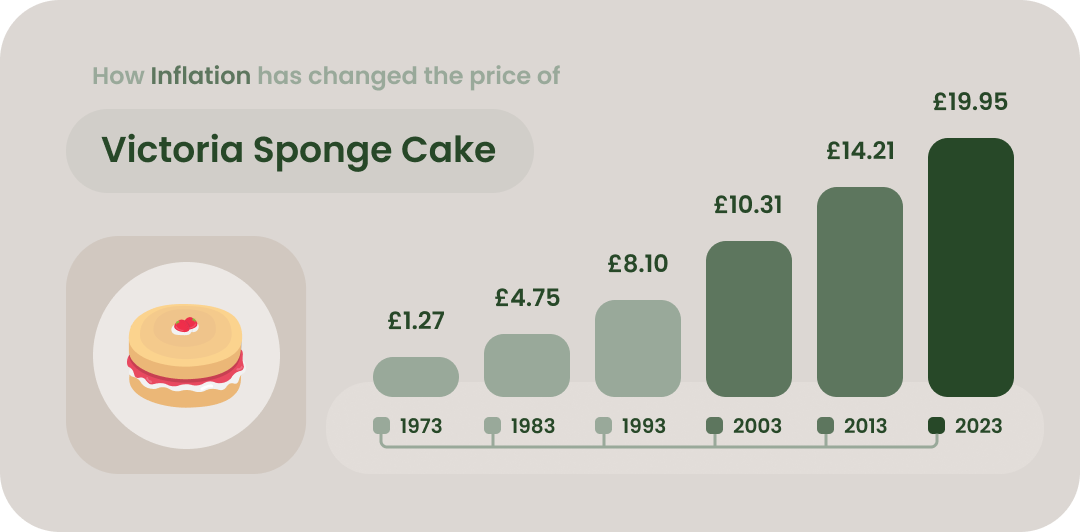
The second most popular dessert adored by British people is Victoria Sponge. Initially loved by Queen Victoria, the sweet and simple sponge cake has remained one of the main desserts that Brits will have on their tables, paying around £19.95 for one at Primrose Bakery, a well-known bakery in London. The price of this delicious cake has increased by 40.39% since 2013, when it cost £14.21, and by 1470.87% since 1973, when a family could enjoy it for just £1.27. Compared with the inflation rate between 2013-2023 and 1973-2023, which is 40.41% and 1471.09%, the price remains slightly cheaper.
From the introduction of these iconic dishes into British cuisine to their natural appearance on menus today, the impact of inflation has been felt in every pound spent.
For some dishes, the inflation transformed them into slightly more expensive foods, while for others, the price was kept low. However, with each bite of a classic British meal, we are reminded not only of the flavours that have stood the test of time but also of the intricate dance of inflation.
Methodology
We looked for popular restaurants and cafés across the UK that include these 8 favourite dishes in their main menu or have dedicated menus for one of these foods and gathered the average prices for each dish. Then, we used the Historic inflation calculator to check how much prices for each dish have been worth in the last half-century, 2023-1973. We also checked the inflation rate between those years and then compared it with the prices to see if they were above or below inflation rates.
You can see the full research here.
Conclusion
Whilst inflation is just one of life’s bugbears we need to get on with, the last 10 years have seen the most significant increase in inflation for decades. This shows the impact that major world events such as COVID-19 and the War in Ukraine have had on prices for essentials.