



The rise in digital technology and communications has led to a meteoric rise in the use of e-currency. For example, statistics showed that in the United Kingdom 76% of people were using internet banking in 2020.
This move to digital forms of money is a threat to the current status of the monetary system and its dominant players. On the plus side, e-money has the potential to solve the problem of the “unbanked” with many of the world’s inhabitants unable to access banking services.
The rise of digital money has also brought the decentralized cryptocurrency revolution led by Bitcoin. These trends are moving the world towards a place where paper money no longer exists, and all transactions are done digitally.
Governments are trying to get in on the act with more digital tax collection systems and central bank-issued forms of e-money. Climate is another factor to consider as some forms of e money, such as cryptocurrency, can be energy-intensive depending on the technology used to create them.
What Is E-Currency?
Electronic money, or e-money, refers to money that exists in banking computer systems that may be used for electronic transactions. E-money is by the fiat currency system and therefore, has value in a tangible form. Electronic money is used because of the convenience offered by digital technology.
Electronic money is stored in various places and most individuals and businesses store their money with their banking providers. However, online-only banks and digital wallets such as Payset are now becoming much more common.
At times, when people refer to e-money, they mean cryptocurrency, which refers to digital forms of money that are stored on a blockchain ledger in limited supply. These currencies are decentralized which means that they can be traded without the need for a third-party such as a bank.
How Have Digital Banking Tools Affected the Economy?
Digital banking apps have revolutionized the financial system by bringing new competition to a formerly impenetrable system. Banking providers used to require a huge footprint of branches to compete for customers’ business, but now they can utilize digital technology to operate from a single headquarters.
This means that challenger banks can set up with a fraction of the cost of traditional banks. Those costs can then be passed onto customers in the form of lower costs and fess.
Digital finance has also changed the landscape for cross-border transactions. Sending money abroad used to take a period of days, but can now be done instantly in some cases.
Digital money also makes it easier to track transactions for tax purposes and to send money for tax payment. “Making Tax Digital” is a key part of the U.K. government’s plans to make it easier for individuals and businesses to get their taxes right.
These are some examples of the added value of digital tools to the economy, but in the end, consumers and individuals love their convenience. It is now possible to pay for goods and services at merchant outlets with a mobile phone. This removes the need to carry cash or track down an ATM to make the purchase.
Is E-Currency Good for the Economy?
E-currency is good for the economy because it can speed up the transfer of money. Businesses or individuals can receive loans more quickly and merchants can get acces to national or overseas sales.
This money can then be reapplied to other parts of the economy. In banking transactions, individuals can also share money with friends and family very quickly. Digital currency also has the potential to solve the problem of the “unbanked”- those who do not have easy access to bank accounts or financial services.
In a recent report titled, “A New Era of Digital Money,” the International Monetary Fund said:
“Digital money has the potential to transform the financial sector. Emerging markets and lower-income countries stand to gain the most from this dramatic shift. Broad and inexpensive access to digital money and phone-based transactions could open the door to financial services for 1.7 billion people without traditional bank accounts.”
“And countries may grow increasingly connected, facilitating trade and market integration. The real-world impact is significant,” they added.
E-currency has already had an impact in improving the outlook as the World Bank says that 62% of the world’s population has a bank account. That figure was only 51% in 2011 and is a sign that technology is making improvements. However, in countries like Africa, McKinsey projects that around 80% percent of the continent is not connected to formal financial services.
Only two percent of retail transactions in Africa are electronic, with the rest being done in cash. There is still a lot of growth potential to come in e-money and that may come with central bank and government-supported forms of currency that individuals will trust more with their money.
What Are the Main Issues Surrounding E-Currency?
Although electronic money is quickly becoming more popular and is often seen as being more secure and transparent than fiat currencies, this does not mean that it is free from risk. Fraud is a key issue when money can be transferred from one party to another easily without the need for physical verification of the sender’s true identity.
Current providers solve this with things like Know Your Customer (KYC). Electronic transactions can also be more private and discreet, making them easier to hide for taxation purposes.
Finally, the computer systems that are used executing electronic transactions are not always perfect, meaning that electronic money transactions can sometimes go wrong due to system error.
Although e-money is more transparent, some argue that this removes a large amount of privacy for individuals. Authorities are happy to use e-currency for tax tracking purposes but many individuals are unhappy that every trip or digital purchase can be used for profiling their lives.
Does E-money Cause Inflation?
The term inflation has been a buzzword over the last year as the pandemic lockdowns created supply chain issues that hiked up prices on many goods. Inflation is when price rises lead to a decline in purchasing power over time.
Inflation also means that wage increases are eroded by higher prices. E-money does not increase the supply of money if it is tied to the fiat money system, and therefore, inflation is in the control of the central banking system. E-money only speeds up transactions, it does not add to price increases.
According to Trading Economics data, the supply of money (M1) was 4% higher from January 2022 to October. Inflation is running much higher at over 10% and e-money can only speed up the pace that the money supply circulates. Inflation is caused by a number of dynamics that e-money has no control over: energy prices, public transport costs, and business prices being a few of those.
Are E-Currencies Likely to Replace Print Currencies?
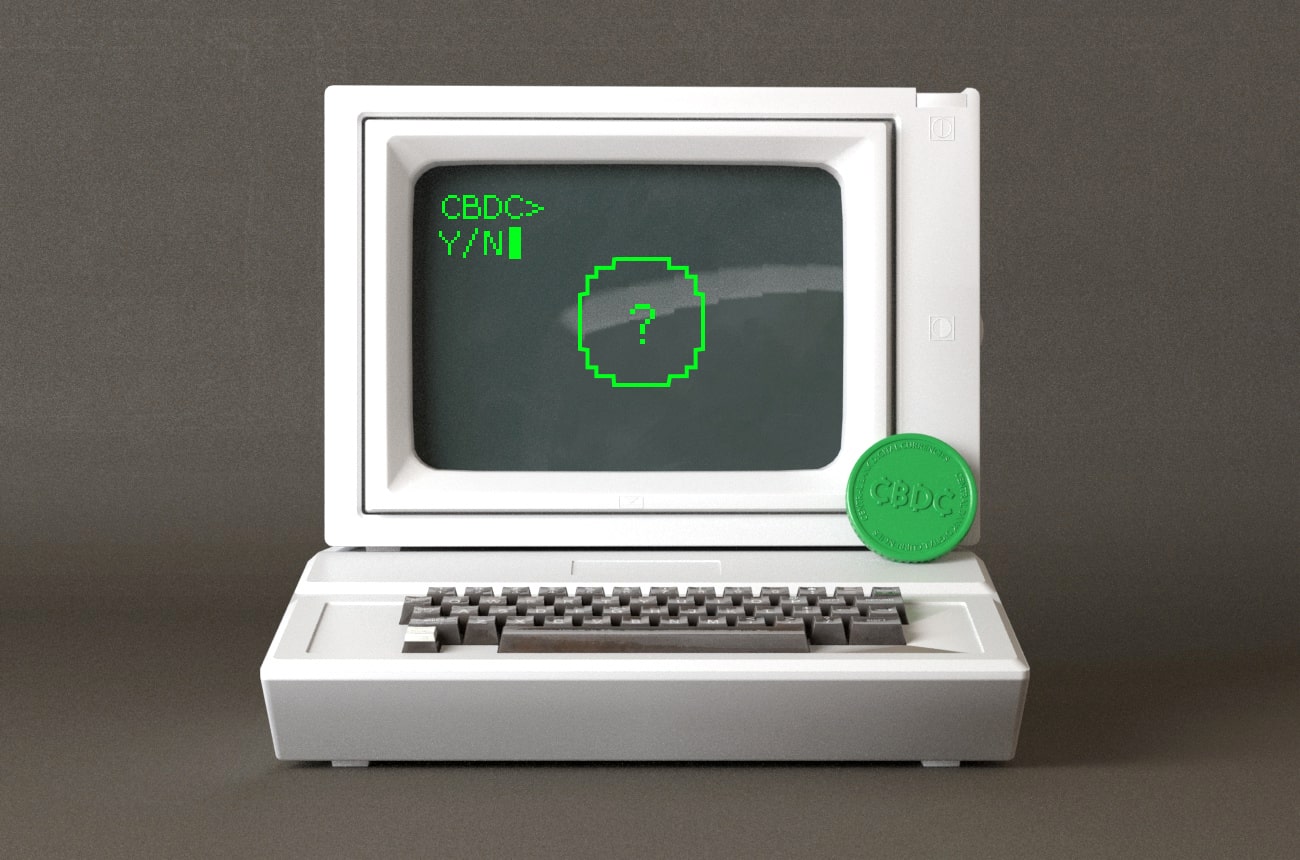
Yes, the world’s largest central banks, including those of the United States and China, are actively studying the potential to release Central Bank Digital Currencies (CBDCs). This would be in the form of a digital yuan or dollar that is backed by underlying assets, such as gold and government bonds.
The rise of decentralized currencies has spurred this move as governments want to keep their hold on the financial system. Brazil is the latest country to join the bandwagon with plans to launch a digital currency in 2024, while India is also working on plans for a digital Rupee.
The European Central Bank wants to phase in a digital euro as part of a two tier system, saying: “It would be a central bank digital currency, an electronic equivalent to cash. And it would complement banknotes and coins, giving people an additional choice about how to pay.”
The reasons for moving towards a digital euro were stated as a means to “respond to the increasing demand for safe and trusted electronic payments. Having digital money issued by the central bank would provide an anchor of stability for the payment and monetary systems.”
Central banks are worried that having too many digital forms of money would undermine national currencies and are moving to release their own offerings with the backing of their reserves and reputation. At present, all of the largest economies in the world are studying their own digital currency. However, their dominance will follow trade just as fiat money does.
How Will E-Money Affect Banks?
E-money is already affecting the role and purpose of banks as fees and transaction times for cross-border transactions have been slashed. The future of banks will hinge on whether government CBDCs or decentralized forms of finance are in charge.
Investment bank Goldman Sachs has recently been exploring the potential for decentralized bonds and this is a sign that they want to be a challenger in the decentralized, e-currency world.
Another issue for banks is the loss of deposits arising from the new breed of competition. For example, Statista reported that in March 2022, PayPal had over 429 million active accounts and that means that money and savings are circulating the economy and taking fees and deposits away from traditional banks. PayPal had around $25bn of revenues in 2021, which although is still smaller than Bank of America’s $86bn, it is still a sizable amount.
On cryptocurrency, e-currency removes the need for a third party and lowers the free structure. One complaint levied at PayPal can be its higher fees and decentralized currencies lower the free structure further. Maybe that is why the JP Morgan CEO has called Bitcoin “worthless.” Proponents of the current financial system point to the backing of gold, world economic produce, and central banks for intrinsic value and that is why they would also support CBDCs.
Is E-Currency Still a Good Investment?
E-currencies in the form of decentralized cryptocurrencies such as Bitcoin have had a volatile time. Bitcoin soared in 2021 to highs above $60,000 but has since crashed back to under $20,000. The problem for many cryptocurrencies is a lack of regulation and that comes closer with every negative market event. The most recent was the collapse of the FTX exchange which saw a $32bn company go bankrupt within two-weeks.
The Chief of the U.S. Securities Regulator, the SEC, previously said that cryptocurrency was a “Wild West”. His remarks were due to the fact that there were so many different currencies now on the market. As he said, “there is no need for 5-600 forms of private money”. Investors should be careful which e-currency projects they put their money into.
Another factor to consider is the climate as annual emissions from digital currencies amount to about 140 million metric tons of carbon dioxide — similar to the combined footprint of the 110m population of the Philippines.
A technological move in September by the Ethereum cryptocurrency saw its energy consumption cut by more than 99%. Criticism has previously been levied at the likes of Bitcoin over its energy footprint and investors would be safer with greener forms of digital money. If governments decide to go with digital forms of money then they would have to avoid looking hypocritical with an energy-intensive option.